
Solar Power Projects
We implement projects that protect ecosystems, manage natural resources sustainably, and preserve biodiversity, ensuring a healthier planet for future generations.
Scope of Consultancy
- Feasibility Study Consultancy
- Technical Feasibility
- Financial Feasibility
- Legal and Regulatory Feasibility
- Design Consultancy
- Detailed System Design
- Grid Connection Design
- Monitoring and Control System Design
- Construction Supervision Consultancy
- Site Supervision
- Equipment Installation Supervision
- Grid Connection Supervision
- Project Management and Documentation

Detailed Scope of Consultancy
- Feasibility Study Consultancy
- Technical Feasibility
- Site Assessment: Conduct a comprehensive site assessment, including:
- Topographical survey: Determine site topography, elevation changes, and potential obstacles.
- Solar resource assessment: Analyze solar irradiance data, cloud cover, and shading factors to determine optimal panel orientation and tilt angles.
- Soil investigation: Evaluate soil conditions for foundation design and potential ground-mounted systems.
- Environmental impact assessment: Assess potential environmental impacts and identify mitigation measures.
- System Sizing and Configuration:
- Determine optimal system capacity: Calculate the required solar panel array size based on energy demand and site conditions.
- Select appropriate technology: Evaluate different solar panel types, inverters, and balance-of-system components based on cost, efficiency, and reliability.
- Develop system layout: Design the layout of solar panels, inverters, and other components, considering space constraints, aesthetics, and safety regulations.
- Grid Connection Feasibility:
- Assess grid capacity: Determine the available capacity at the nearest substation and the feasibility of grid connection.
- Develop grid connection plan: Outline the process for obtaining grid connection permits and necessary technical specifications.
- Preliminary Cost Estimation:
- Develop a preliminary cost breakdown: Estimate the costs of solar panels, inverters, installation, grid connection, and other project components.
- Assess financing options: Explore potential sources of funding, including government incentives, bank loans, and private investment.
- Site Assessment: Conduct a comprehensive site assessment, including:
- Financial Feasibility
- Project Revenue Analysis:
- Calculate annual energy generation: Estimate the expected energy output based on site conditions and system design.
- Project the PPA revenue: Calculate the revenue stream based on the agreed PPA rates for different periods.
- Cost Analysis:
- Develop a detailed cost breakdown: Estimate the total project cost, including equipment, installation, maintenance, and financing costs.
- Analyze operational expenses: Estimate annual operating and maintenance costs.
- Financial Modeling:
- Develop a financial model: Project cash flows, profitability, and return on investment for the project lifecycle.
- Perform sensitivity analysis: Evaluate the impact of different variables (e.g., PPA rate, energy yield, financing costs) on project viability.
- Economic Viability Assessment:
- Calculate key financial metrics: Determine the payback period, internal rate of return (IRR), and net present value (NPV).
- Assess the project’s economic feasibility: Analyze the financial viability of the project based on the calculated metrics and market conditions.
- Project Revenue Analysis:
- Legal and Regulatory Feasibility
- Review relevant legislation: Analyze applicable laws and regulations related to solar power projects in Sri Lanka.
- Identify required permits and licenses: Determine the necessary permits and licenses for land use, construction, grid connection, and environmental compliance.
- Assess regulatory framework: Evaluate the current regulatory environment and its impact on project development.
- Technical Feasibility
- Design Consultancy
- Detailed System Design:
- Finalize system configuration: Select specific solar panel types, inverters, and other components based on technical specifications and cost-effectiveness.
- Develop detailed system layout: Create detailed drawings and specifications for the layout of solar panels, inverters, cabling, and other components.
- Design electrical system: Develop the electrical schematic, including wiring diagrams, protection devices, and grid connection details.
- Develop structural design: Design the foundation and mounting structures for the solar panels, considering site conditions and wind loads.
- Prepare detailed specifications: Provide detailed specifications for all equipment, materials, and construction methods.
- Grid Connection Design:
- Develop grid connection plan: Outline the process and technical requirements for connecting the solar power plant to the grid.
- Design grid connection equipment: Specify the type and capacity of transformers, switchgear, and other grid connection equipment.
- Coordinate with the utility: Work with the electricity utility to ensure compliance with grid connection standards and procedures.
- Monitoring and Control System Design:
- Develop a monitoring and control system: Design a system for real-time monitoring of energy generation, performance, and system health.
- Select monitoring equipment: Specify the type and functionality of monitoring devices, data loggers, and communication systems.
- Integrate with SCADA: Design the integration of the monitoring system with a supervisory control and data acquisition (SCADA) system for remote management.
- Detailed System Design:
- Construction Supervision Consultancy
- Site Supervision:
- Oversee construction activities: Supervise the construction process, ensuring compliance with approved design plans and specifications.
- Quality control: Monitor the quality of materials, workmanship, and installation, ensuring compliance with industry standards.
- Safety management: Implement safety protocols and ensure compliance with occupational health and safety regulations.
- Coordinate with contractors: Manage the coordination and communication between different contractors involved in the project.
- Equipment Installation Supervision:
- Supervise solar panel installation: Ensure proper installation of solar panels, including mounting, wiring, and connections.
- Supervise inverter installation: Oversee the installation of inverters, transformers, and other electrical equipment.
- Monitor equipment commissioning: Supervise the commissioning of the solar power plant, ensuring proper functionality and performance.
- Grid Connection Supervision:
- Coordinate with the utility: Work with the electricity utility to ensure smooth grid connection procedures.
- Supervise grid connection testing: Oversee the testing and commissioning of grid connection equipment.
- Ensure compliance with grid connection standards: Ensure that the solar power plant meets all grid connection requirements.
- Project Management and Documentation:
- Prepare progress reports: Provide regular progress reports to the client, outlining project milestones, achievements, and any challenges encountered.
- Maintain project documentation: Document all project activities, decisions, and changes, including drawings, specifications, and test reports.
- Ensure project completion: Oversee the completion of the project within budget and schedule, ensuring compliance with all relevant regulations and standards.
- Site Supervision:
Related Past Projects
Solar Power Projects
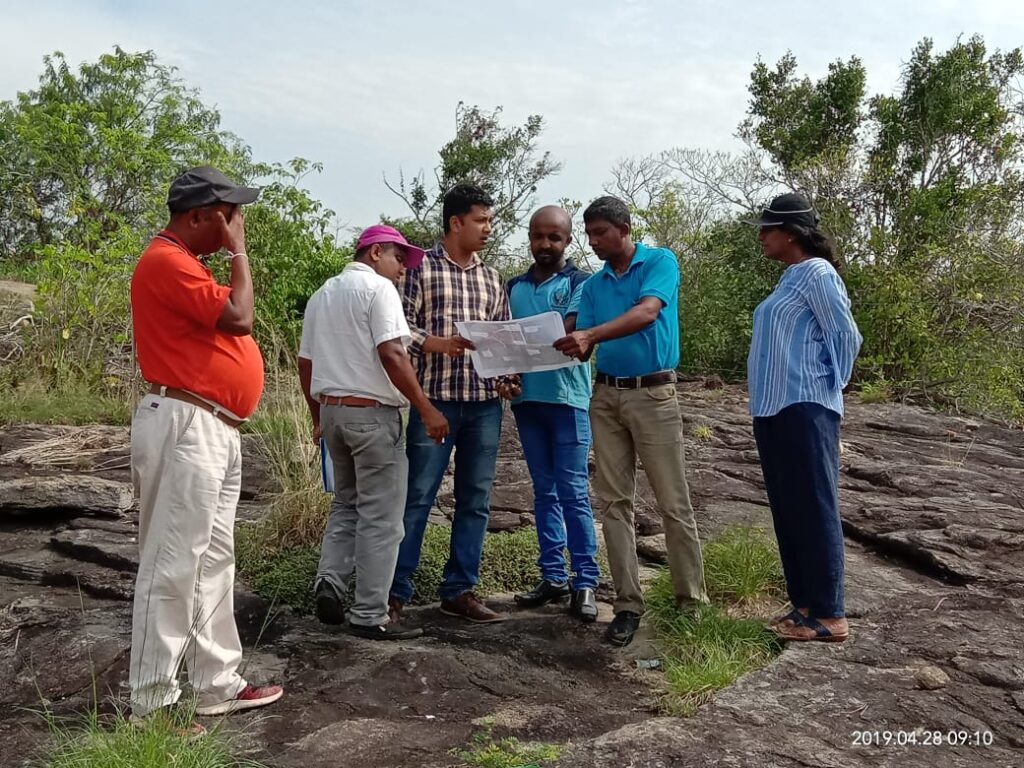
Project: Proposed Grid-Interactive 100 MW Solar Photovoltaic Power Project in Trincomalee
Donor: Private Funding
Client: Orbital Energy Private Limited.
The project aims to develop a 100 MW (peak) grid-interactive solar photovoltaic power plant in Trincomalee to generate clean, renewable electricity for supply to Sri Lanka’s national grid, supporting the country’s transition to sustainable energy. As the project area includes lands under the jurisdiction of the Department of Forest Conservation, an Initial Environmental Examination (IEE) was required. The objective of the assignment was to prepare the IEE report in accordance with the Terms of Reference (TOR) issued by the Forest Department, ensuring that the proposed development adheres to all relevant environmental regulations and safeguards.